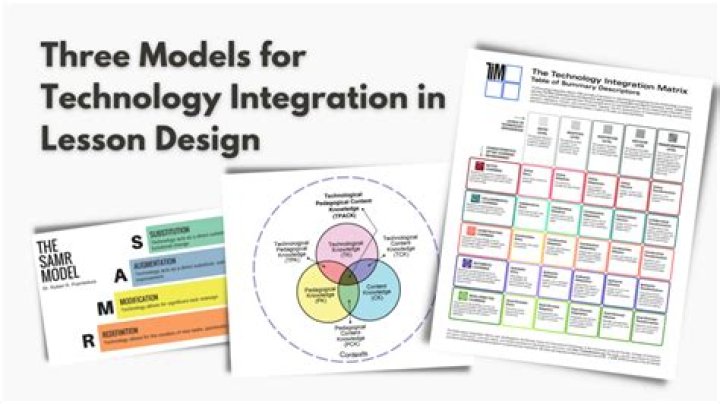
There are many similarities in Technology Integration Models. Each work to move students from consumers to producers. Each keeps the focus on learning, believing technology is a tool to teach concepts in a way that enhances learning. Each start with Ed Tech as a substitute and builds until the classroom lesson is transformed into an entirely new experience that improves instructional quality and uses higher-order cognitive skills.
However, as good as all this sounds, many teachers are still hesitant to integrate technology into the classroom. Instead, they are more comfortable instructing students in a lecture format. This pedagogical model was beneficial to students in the industrial and post-industrial ages; however, it does not prepare students for future success in the digital age. What is missed in this teacher-centered instruction is involving the students themselves.
I like how the T3 Framework increments the use of Ed Tech into teaching and learning, leading up to the Transcendent stage (T3). In the Transcendent stage, students use original inquiry to grapple with a “wicked problem” and then use their new found knowledge to improve society. Wicked problems, as defined by Riltel and Webber (1973), are “problems that are difficult to define and inherently unsolvable.” Students become intrinsically motivated as they choose a wicked problem that matters to them, thereby bringing their passion to the project. Students become better prepared to face their next learning challenges, whether in a future classroom or the world of work. TheT3 Framework sets up our students as lifelong learners.